
22-01-2026
AI-Powered Product Discovery: From Assumptions to Evidence
.jpg)
AI-powered product discovery is the process of using artificial intelligence to identify, validate, and prioritize customer problems before building solutions. It helps product teams replace assumptions with real evidence derived from data, user behavior, and feedback. At Velociti PM, AI-powered product discovery is positioned as a core capability that enables smarter and more confident product decisions.
Traditional product discovery often depends on interviews, surveys, and manual research. While these methods still matter, they struggle to scale as products and user bases grow. AI-powered product discovery enhances these efforts by analyzing large volumes of qualitative and quantitative data quickly and consistently, an approach actively promoted and practiced at Velociti PM.
For product managers and product teams, this approach enables faster insights, clearer problem definition, and stronger confidence in product decisions. By combining human judgment with AI-driven evidence, Velociti PM helps teams move from opinion-led discovery to data-backed product strategy.
Product Discovery vs Product Delivery
Product discovery and product delivery serve different but connected purposes.
Product discovery focuses on understanding what to build and why. It explores user needs, problems, and opportunities. Product delivery focuses on how to build the solution and ship it to users.
Many teams rush into delivery without completing discovery. As a result, they build features that look good internally but fail in the market. AI-powered product discovery helps teams slow down at the right stage and accelerate with clarity later.
Discovery answers whether a problem is worth solving. Delivery answers how fast and how well the solution can be built.
Why Product Teams Struggle With Discovery
.png)
Many product teams struggle with discovery due to structural and cultural challenges.
First, teams often rely on assumptions instead of evidence. Stakeholder opinions or past experiences replace real user insight. Second, manual research takes time and requires specialized skills. Third, data exists in silos such as support tickets, analytics tools, surveys, and reviews.
AI-powered product discovery helps overcome these barriers by connecting data sources, automating analysis, and surfacing insights continuously.
How AI Transforms the Product Discovery Process
AI transforms product discovery by shifting it from periodic research to continuous learning.
Instead of running research once per quarter, AI systems analyze user behavior and feedback in real time. They detect patterns, anomalies, and emerging needs that humans might miss.
AI-powered product discovery enables teams to test assumptions faster and adjust direction before committing resources.
AI for User Needs Analysis
Understanding user needs is central to discovery. AI improves user needs analysis by processing large datasets such as session recordings, support conversations, app reviews, and surveys.
Natural language processing groups similar feedback into themes. Machine learning models identify unmet needs based on behavior patterns. This helps product teams validate personas and refine target segments.
For example, AI can reveal that users abandon a feature not due to complexity but because it does not solve their core problem.
AI for Problem Mapping
Problem mapping connects user pain points to business outcomes. AI-powered product discovery tools analyze correlations between user behavior and key metrics such as retention or conversion.
This allows teams to identify which problems matter most. Instead of guessing priorities, product managers use evidence to focus on high impact issues.
AI also helps distinguish symptoms from root causes, which is critical for effective problem solving.
AI Discovery Tools Used by Product Teams
AI discovery tools support different stages of the product discovery process.
Some tools analyze user research transcripts and highlight insights. Others aggregate customer feedback from multiple channels and detect trends. Predictive tools estimate the potential impact of solving a specific problem.
Popular categories include user research analysis platforms, voice of customer tools, and experimentation engines. These tools support evidence-based product management by making insights accessible and actionable.
Evidence-Based Product Management With AI
Evidence-based product management relies on data instead of opinions. AI-powered product discovery makes this approach practical at scale.
Product managers can form hypotheses, test them using behavioral data, and validate outcomes before building full solutions. AI enables faster experiments and clearer learning loops.
This approach reduces waste, improves alignment, and increases the likelihood of product success.
For example, instead of building a feature based on stakeholder demand, teams validate demand through behavioral signals and predictive models.
Practical AI-Powered Product Discovery Framework
A simple AI-powered product discovery framework includes five steps.
First, collect signals from multiple sources such as analytics, feedback, and usage data. Second, use AI tools to identify patterns and anomalies. Third, map insights to user problems and business goals. Fourth, prioritize problems based on evidence. Fifth, validate solutions through experiments.
This framework supports continuous discovery rather than one-time research.
Challenges and Limitations of AI in Product Discovery
Despite its benefits, AI-powered product discovery has limitations.
AI depends on data quality. Poor or biased data leads to misleading insights. AI also lacks contextual understanding that humans provide. Ethical concerns and privacy compliance must be addressed.
Product teams should treat AI as an assistant, not a decision maker. Human judgment remains essential for interpreting insights and making final decisions.
How Product Managers Can Start Using AI for Discovery
Product managers can start small by integrating AI into existing workflows.
Begin by identifying discovery bottlenecks such as slow research analysis or unclear prioritization. Select AI discovery tools that address these gaps. Build basic data literacy within the team.
Most importantly, maintain a learning mindset. AI-powered product discovery works best when teams continuously refine questions and test assumptions.
You can also explore structured learning programs on https://www.velocitipm.com/ to strengthen discovery skills.
Future of AI in Product Discovery
The future of AI-powered product discovery points toward autonomous and continuous discovery systems.
AI will increasingly identify opportunities, suggest experiments, and predict outcomes with minimal manual input. Product teams will focus more on strategy, ethics, and creativity.
As AI matures, discovery will become faster, more accurate, and more closely aligned with real user needs.
Conclusion
AI-powered product discovery helps product teams move from assumptions to evidence. By combining human insight with machine intelligence, teams can understand user needs, map real problems, and make confident product decisions. This blog highlights how data-driven discovery practices are reshaping modern product management.
While AI does not replace product managers, it amplifies their ability to learn, prioritize, and deliver value. For teams aiming to build products users truly need, AI-powered product discovery is no longer optional, and insights shared through this blog serve as a practical guide for teams adopting AI-led discovery.
Frequently Asked Questions
What is AI-powered product discovery?
AI-powered product discovery uses artificial intelligence to analyze user data and feedback to identify real problems before building solutions.
How is product discovery different from product delivery?
Product discovery focuses on understanding what to build and why, while product delivery focuses on building and shipping the solution.
Can AI replace product managers in discovery?
No. AI supports discovery by providing insights, but human judgment is essential for interpretation and decision making.
What data is used in AI-powered product discovery?
Common data sources include product analytics, user feedback, support tickets, surveys, and behavioral data.
Is AI-powered product discovery suitable for small teams?
Yes. Many AI discovery tools scale well and help small teams gain insights quickly without heavy research overhead.

Similar Blogs
.png)
.png)
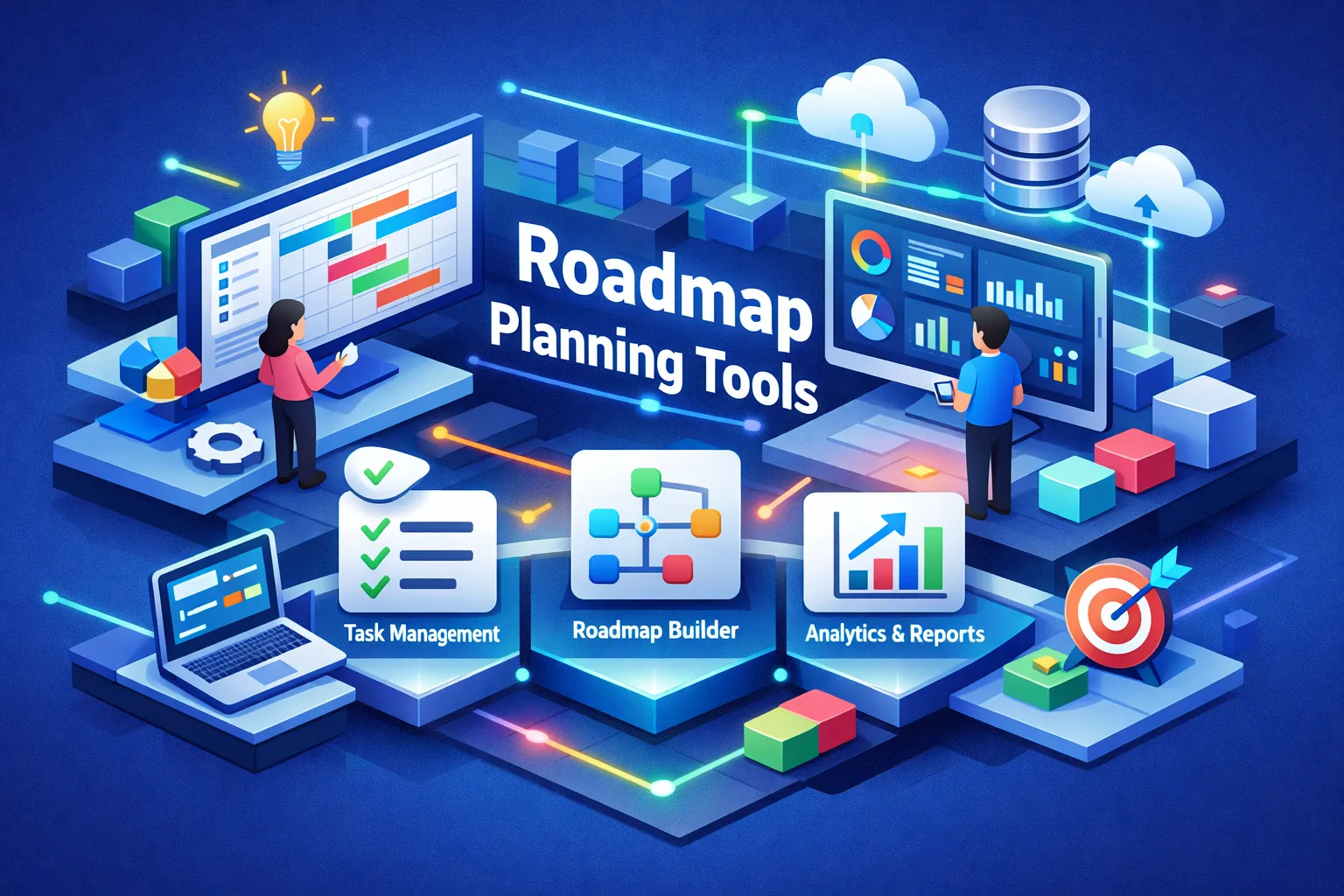
How to Choose the Best Software Tools for Product Roadmap Planning
Ready to supercharge your product workflow?
Join thousands of product managers who've stopped guessing and started building with evidence. No credit card required, no lengthy setup — just better discovery, starting today.