
The FIT>BUILD>LAUNCH Framework was born out of 25 years of product development at both startups and big tech, including eBay andAmazon. It combines modern product management principles with agile and lean development techniques. Powered by AI + Methodology + Workflow, FIT is the foundation of the Velociti.
In the FIT phase, the focus is on Discovery, Experimentation, and Definition. The goal is to identify the right problems tosolve, prioritize outcomes, and break down challenges into actionable initiatives. By leveraging our product discovery framework, teams can ensure their efforts target high-impact opportunities and move faster toward validated solutions.
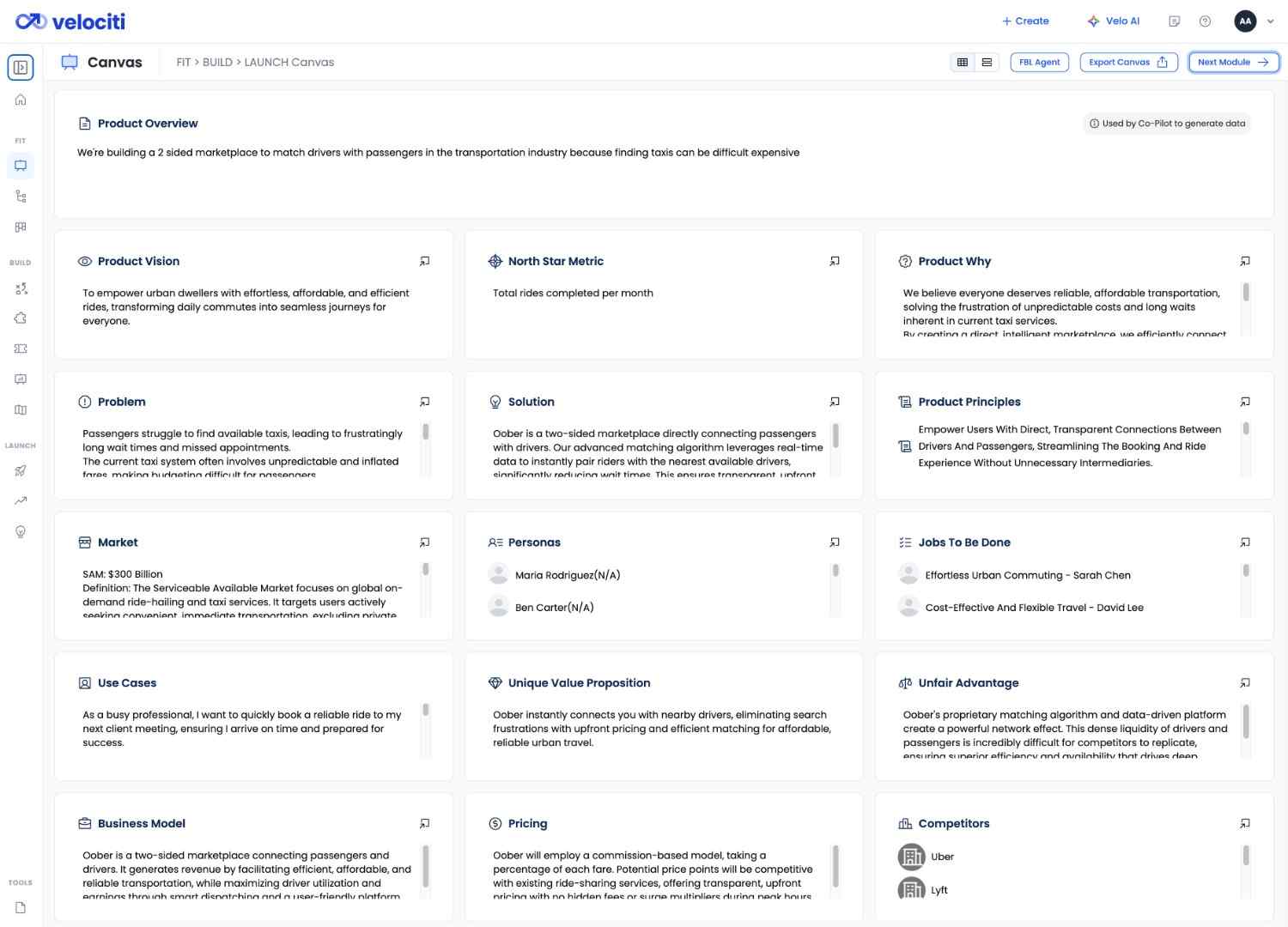
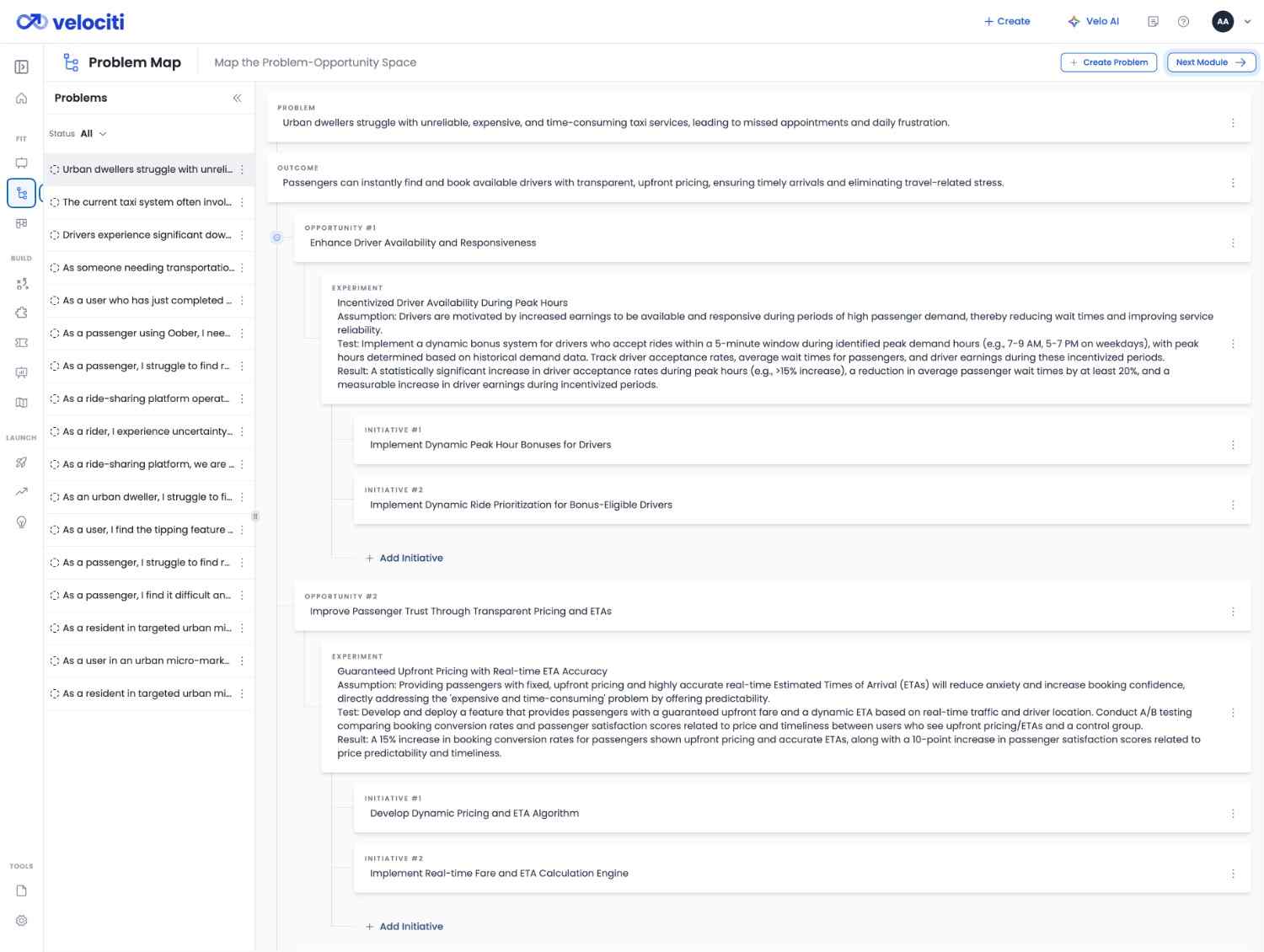
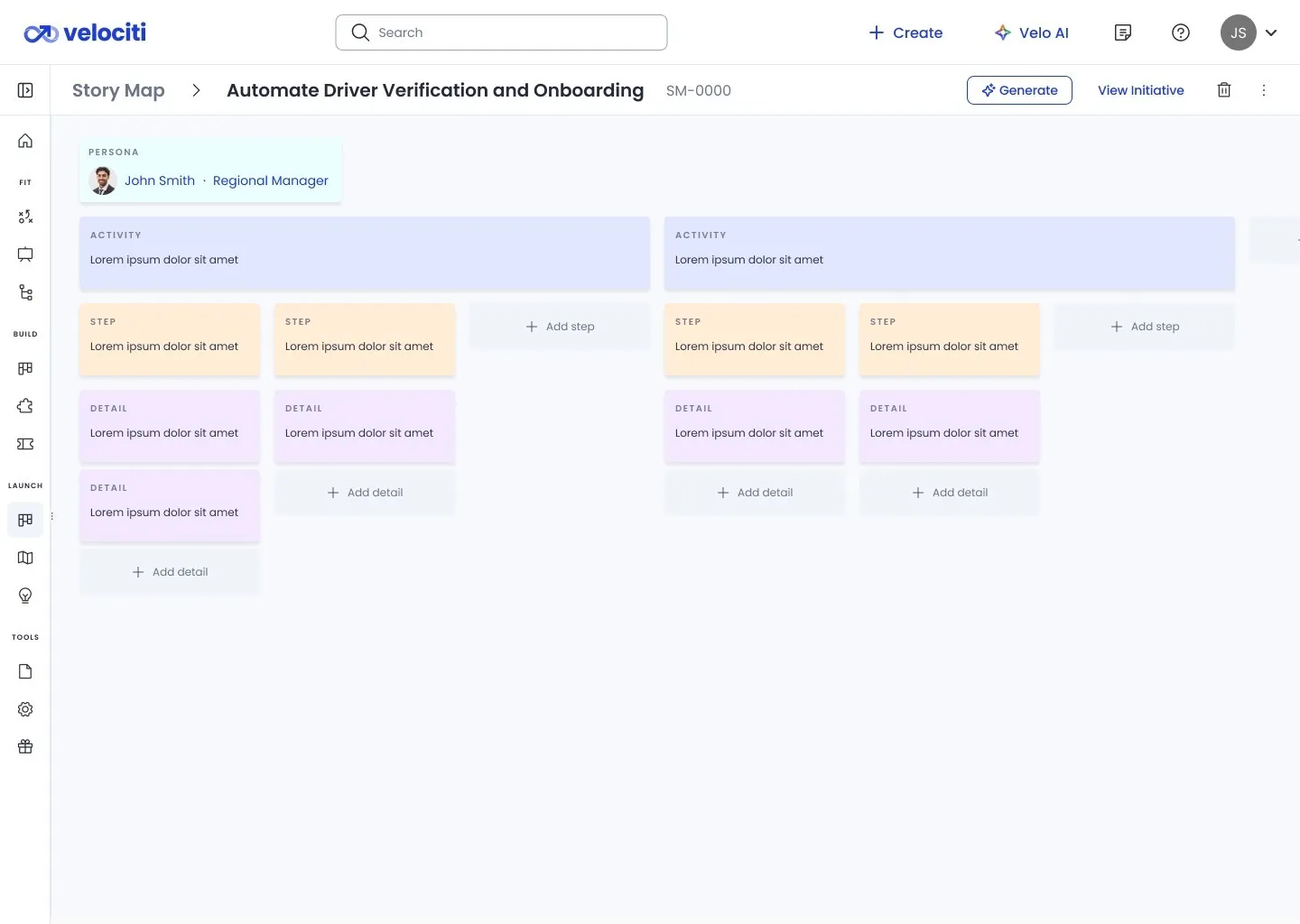
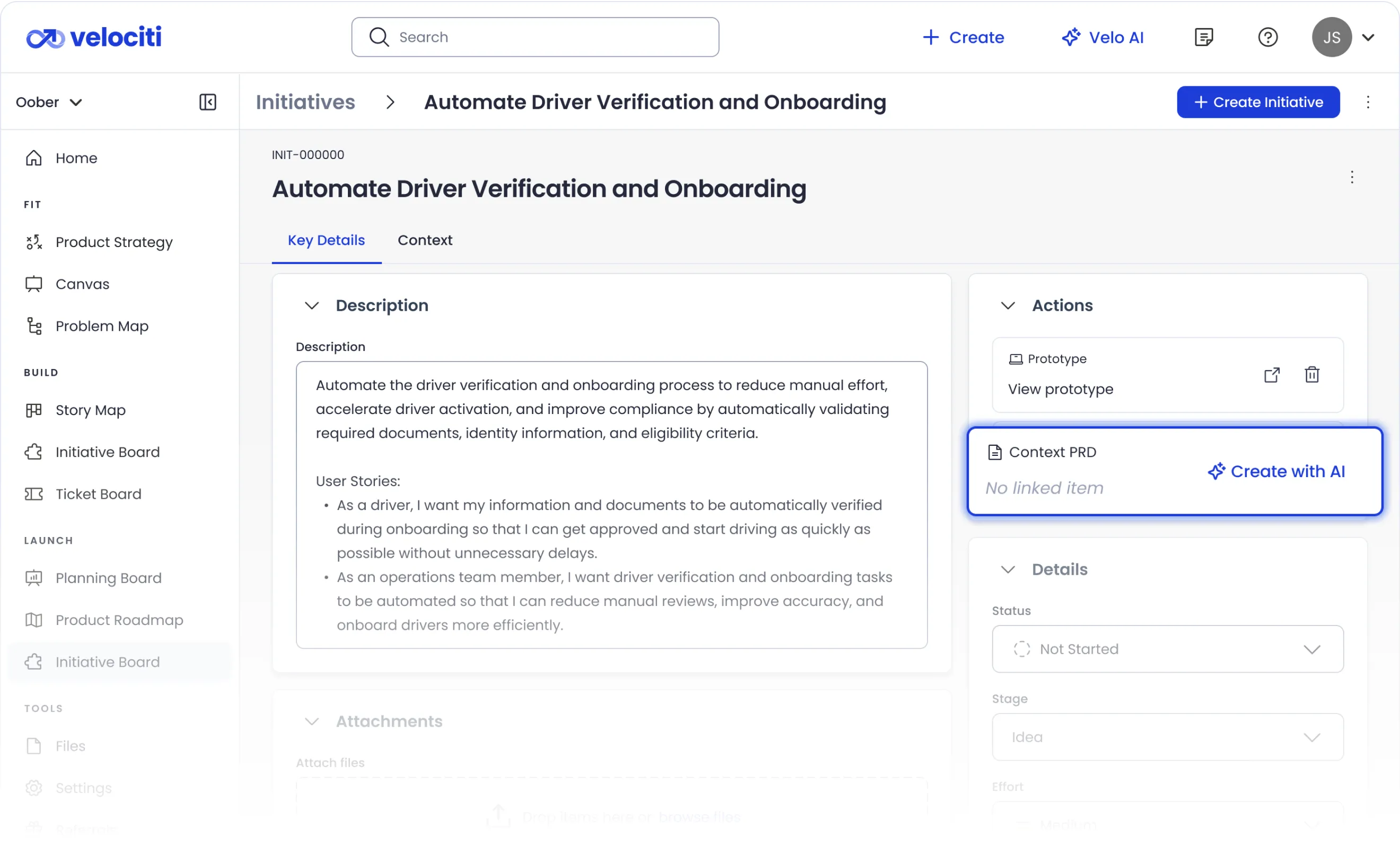
Teams can work together seamlessly, with stakeholders, developers, and designers aligned in real time.
Make confident decisions using insights captured across initiatives without relying on intuition alone.
Adapt the platform to your team’s unique processes while maintaining a consistent discovery framework.
Monitor experiments, initiatives, and goals briefly to ensure projects stay on schedule
Connect with your current product management, analytics, and communication tools to reduce friction
From small startups to large enterprises, the platform grows with your product development needs
Using Velociti, the FIT phase help steams leave with validated problems, measurable outcomes, and prioritized initiatives. The main result is clarity and alignment-everyone knows what to build next, why it matters, and how success will be measured, reducing risk and wasted effort.
In Velociti, teams typically achieve actionable clarity from the FIT phase in 2 to 4 weeks. Early insights, such as validated assumptions or mapped opportunities, often appear in the first week, enabling teams to make informed decisions faster.
The FIT phase is designed to fit within normal team work flows. Product managers lead with a few focused hours per week, while designers, engineers, and stakeholders participate in short reviews and experiments rather than lengthy workshops.
During the FIT phase, Velociti allows teams totest assumptions with small, low-cost experiments. This early validation prevents wasted engineering time, reduces the risk of building unwanted features, and ensures resources are focused on high-impact initiatives.
Yes. In the FIT phase, AI features in Velociti help teams synthesize research, detect patterns, and surface connections faster. This accelerates insight generation while keeping human judgment central to prioritization.
Post-launch growth is handled through a structured Growth Plan focused on acquisition,expansion, and retention. As part of our product lifecycle management software, this plan ties growth directly to product strategy, rather than disconnected marketing or sales tactics. Teams can monitor performance, prioritize initiatives, and ensure that every effort contributes to measurable outcomes.
Velociti applies a structured methodology in the FIT phase that breaks problems into outcomes, opportunities, experiments, and initiatives. Decisions become evidence-driven, traceable, and easier to adjust, improving alignment across product, design, and engineering teams.
Through the FIT phase, Velociti helps teams validate whether problems and outcomes truly matter before scaling. Early confirmation improves adoption potential and ensures resources are invested ininitiatives with real impact.
Even though discovery happens before build, the FIT phase in Velociti accelerates delivery overall. By resolving uncertainty early, teams avoid mid-build rework and misalignment, allowing engineering to execute efficiently once work begins.
Yes. The FIT phase in Velociti is especially valuable for small teams because mistakes are costly. It focuses limited resources on the highest-impact problems, improves confidence in decision-making, and validates initiatives before major investments are made.