
AI-powered ecommerce product management system that improves prioritization, execution, and product-market fit outcomes.
Ecommerce product development fails because teams operate in highly fragmented environments where customer insights, analytics data, and business priorities are spread across multiple disconnected systems. This fragmentation leads to inconsistent decision-making, where product teams often rely on incomplete signals instead of a unified view of customer behavior and market demand.
As a result, roadmap decisions become reactive rather than strategic, with features being prioritized based on urgency, stakeholder pressure, or short-term revenue goals. Without structured validation and alignment across discovery, execution, and launch, ecommerce products are frequently built without clear proof of demand, leading to poor adoption, and weak product-market fit.
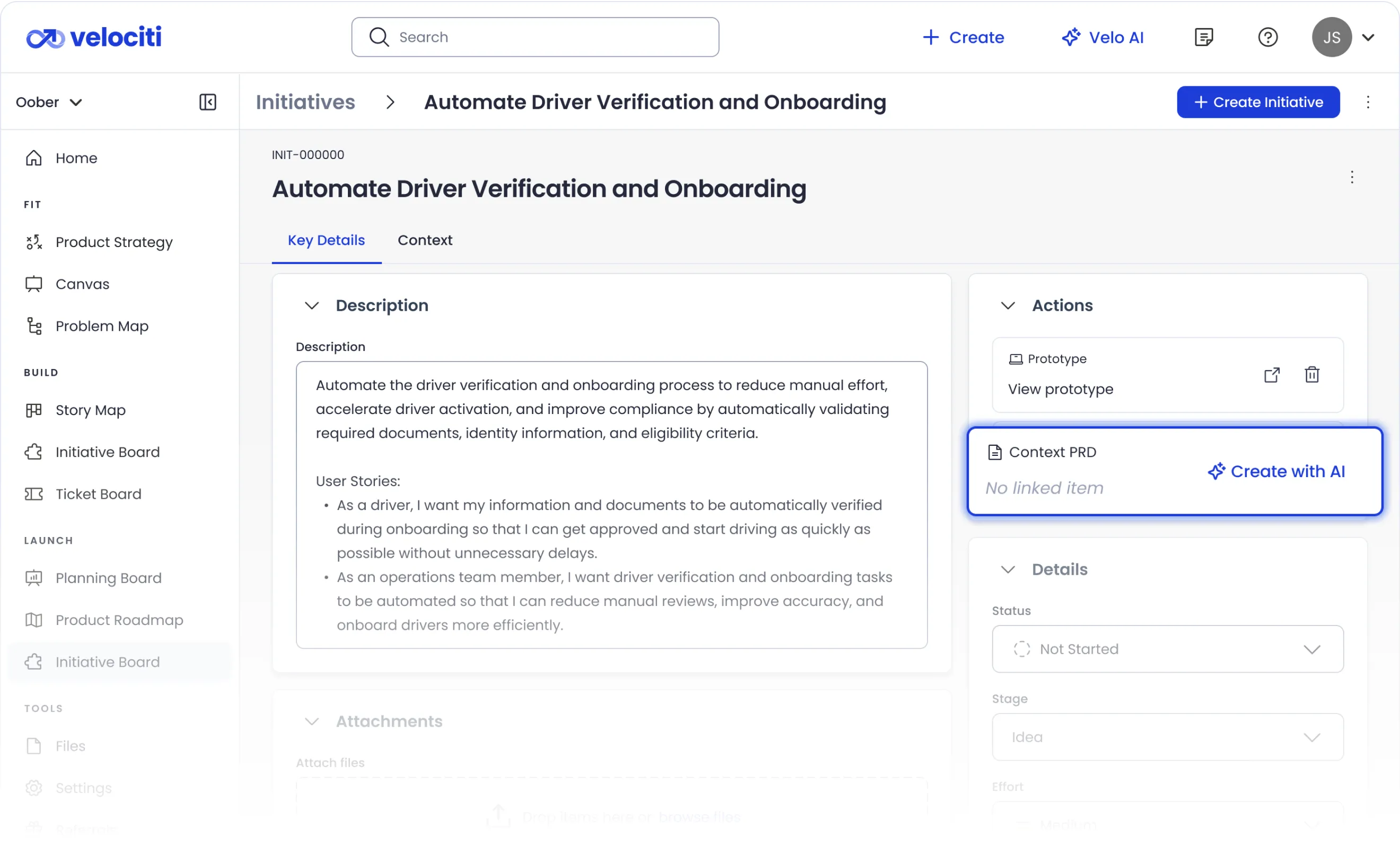
Ecommerce teams often struggle to separate high-intent opportunities from noise across analytics, customer feedback, and behavioral signals. This workflow structures discovery by consolidating insights into actionable product opportunities, reducing assumption-led decisions and improving validation before development begins.
Multi-channel ecommerce environments create fragmentation across marketplaces, D2C platforms, and product catalogs. Alignment becomes critical to avoid inconsistent experiences. This workflow connects strategic decisions across channels, ensuring unified execution and stronger performance across the entire commerce ecosystem.
Product decisions in ecommerce directly influence conversion, retention, and revenue outcomes. It ensures every initiative is mapped to measurable business impact, helping teams move beyond feature delivery and focus on scalable value creation tied to customer behavior and business goals.
Ecommerce roadmaps often become overloaded with competing priorities and stakeholder inputs. The prioritization introduces clarity by ranking initiatives based on impact, effort, and strategic relevance, enabling faster decision-making and reducing execution friction across product and engineering teams.
Product launches in ecommerce frequently fail due to misalignment between product, marketing, and operations. It ensures dependencies are validated, messaging is aligned, and execution is coordinated, improving launch consistency and reducing go-to-market inefficiencies.
Post-launch insights often remain underutilized in ecommerce environments, limiting learning velocity. It ensures performance data feeds directly back into discovery and roadmap planning, enabling ongoing refinement of products and sustained improvement in user experience and business outcomes.
A structured discipline focused on planning, building, and optimizing digital commerce products using customer insights, business objectives, and lifecycle frameworks to improve conversion, retention, and revenue outcomes.
It fails when fragmented data, weak discovery practices, misaligned teams, and reactive decision-making replace validation and long-term product-market alignment.
These challenges include poor discovery processes, inconsistent prioritization, siloed collaboration across teams, and inefficient launches that fail to connect product decisions with measurable business impact.
AI improves decision-making by unifying customer signals, enabling structured prioritization, forecasting feature impact, and strengthening alignment across discovery, execution, and launch phases.
An approach to managing multi-vendor ecommerce ecosystems by aligning catalog decisions, user experience design, and growth initiatives to improve conversion, engagement, and scalability.
A growth-focused approach that aligns product decisions with key metrics like conversion, retention, and revenue, continuously refining features based on customer behavior and market signals.
A strategic planning tool that prioritizes features and initiatives based on customer insights, business impact, and conversion goals to guide product development and execution effectively.
A lifecycle system that ensures teams validate ideas before development, execute with outcome-driven prioritization, and optimize launches through continuous feedback and performance tracking.
Customer behavior, feedback, and market trends form the foundation of discovery, helping teams identify validated opportunities before development and reducing product failure risk.
Stronger product-market fit emerges through validation, AI-driven insights, outcome-based prioritization, and continuous feedback loops across discovery, execution, and launch stages.