
Eliminating fragmentation in product development to drive better clinical and business outcomes.
Teams across the industry are building products without structured validation, relying on disconnected tools, and launching solutions that fail to meet real clinical and patient needs. In an environment where compliance, safety, and usability are critical, this lack of system-driven execution leads to costly delays and failed outcomes in healthtech product development.
The core issue with healthcare product management is the absence of a unified, data-driven approach. Teams operate in silos, decisions are based on assumptions, and there is no clear ownership of the end-to-end lifecycle. As a result, even promising ideas fail to translate into successful products that achieve adoption and long-term impact.
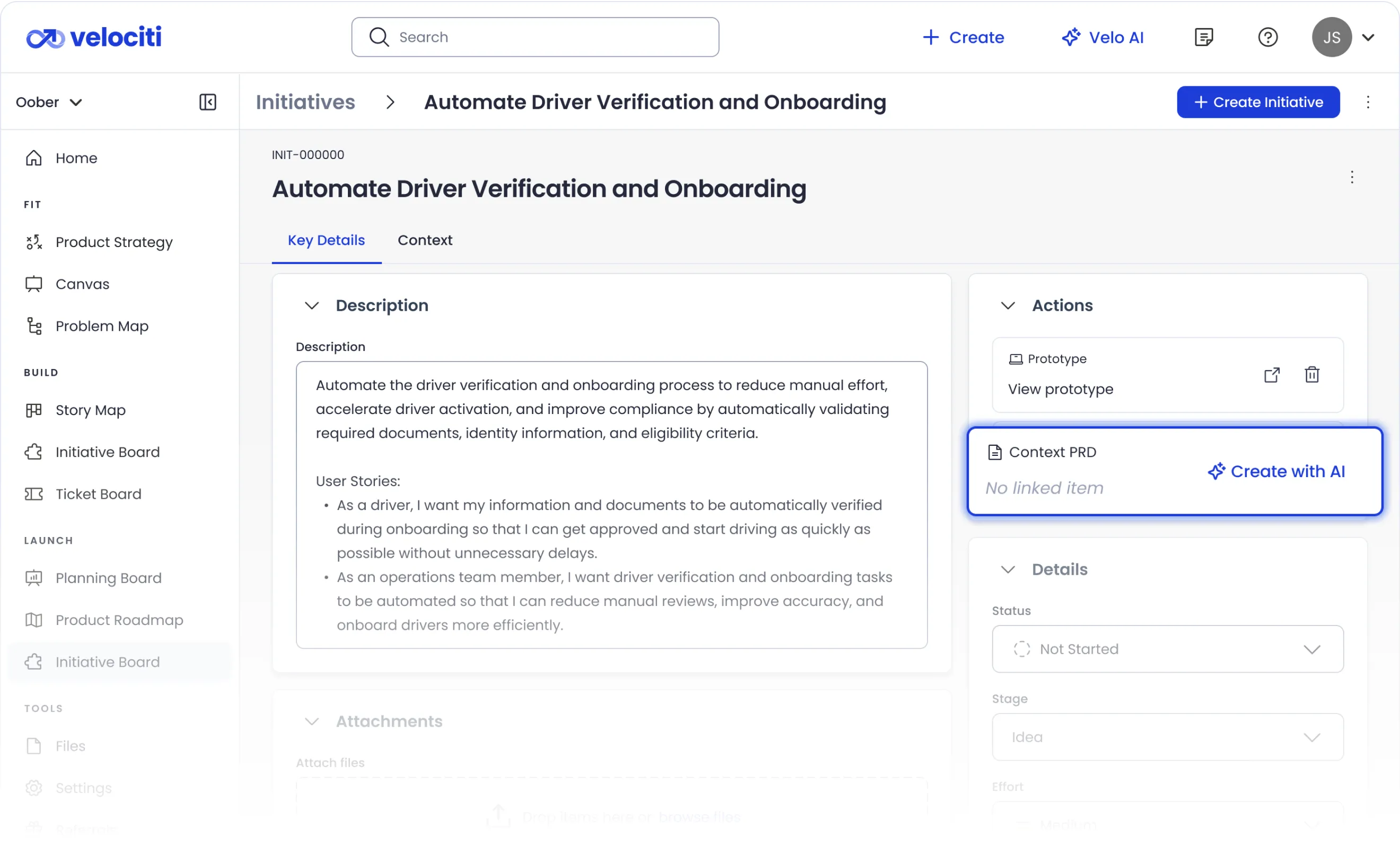
Start by identifying real clinical problems and validating user needs using structured discovery workflows that replace assumptions with evidence-based insights. This helps teams understand actual clinician and patient behavior early, prioritize the right problems, and reduce the risk of building features that don’t deliver real healthcare value.
Move validated ideas into structured development by aligning engineering, product, and compliance teams through a unified execution system. This creates smoother coordination across functions, reduces miscommunication, and keeps development focused on delivering healthcare solutions that are practical, scalable, and aligned with clinical and operational requirements.
Translate validated insights into clear, outcome-driven roadmaps that align business goals, regulatory requirements, and the full healthcare product lifecycle. It brings clarity to what gets built and when, helping teams balance speed with compliance while maintaining visibility across each stage of healthtech product development and delivery.
Break down silos by connecting product, engineering, clinical, and compliance teams into a single workflow for faster, aligned decision-making. It improves communication between stakeholders, reduces dependency gaps, and helps teams stay coordinated while working toward shared healthcare product outcomes without unnecessary friction or delays.
Embed compliance checks directly into every stage of development to ensure healthcare standards are met without slowing down execution. This reduces last-minute regulatory surprises, helps teams stay aligned with evolving healthcare guidelines, and brings compliance thinking naturally into everyday product decisions.
Launch with confidence using real-world performance data, then continuously optimize based on user feedback and clinical adoption metrics. It keeps products evolving after release, improves usability in real environments, and helps teams refine features based on how healthcare providers and patients actually interact with the product.
It aligns product decisions with validated clinical evidence and real-world workflows, ensuring healthcare teams build features that match provider needs, reduce misalignment, and improve patient care outcomes consistently.
It identifies and validates real clinical problems early using data and stakeholder input, preventing wasted development effort and ensuring solutions address meaningful healthcare challenges effectively and accurately.
It embeds regulatory requirements directly into product workflows, enabling continuous compliance tracking throughout development instead of end-stage checks, significantly reducing risks, delays, and regulatory approval failures.
It happens due to poor clinical workflow integration, lack of user adoption strategy, weak onboarding, and absence of continuous feedback loops for real-world product improvement.
It improves communication between product, engineering, and clinical teams, reducing delays, eliminating misinterpretations, and ensuring faster delivery of accurate, usable, and clinically relevant healthcare solutions.
Efficiency improves when teams eliminate fragmented tools, adopt unified workflows, and use structured systems that support collaboration, reduce duplication, and accelerate development cycles across healthcare product teams.
It incorporates real patient behavior, clinical constraints, and usability insights into product decisions, ensuring healthcare solutions are intuitive, accessible, and effective in real-world medical environments.
It leads to disconnected decision-making, delayed iterations, missed improvement opportunities, and reduced product performance due to lack of clear tracking across development, launch, and optimization stages.
These systems analyze clinical data, user feedback, and usage patterns to prioritize features, predict risks, and optimize workflows, enabling faster and more accurate healthcare product development decisions.
It depends on continuous validation, strong clinical alignment, iterative improvement, effective cross-functional collaboration, and the ability to adapt quickly to evolving healthcare regulations and patient needs.