
TheFIT>BUILD>LAUNCH Framework was born out of 25 years of product development at both startups and big tech, including eBay and Amazon. The FBLFramework utilizes the best modern product management concepts, as well asagile and lean development techniques. The framework is powered by AI +Methodology + Workflow, and is the foundation for the Velociti platform.
The LAUNCH phase covers the deployment, launch, and growth of your product. Using our product lifecycle management software, teams can movefrom planning to launch to scale with confidence, reducing friction and maximizing impact.
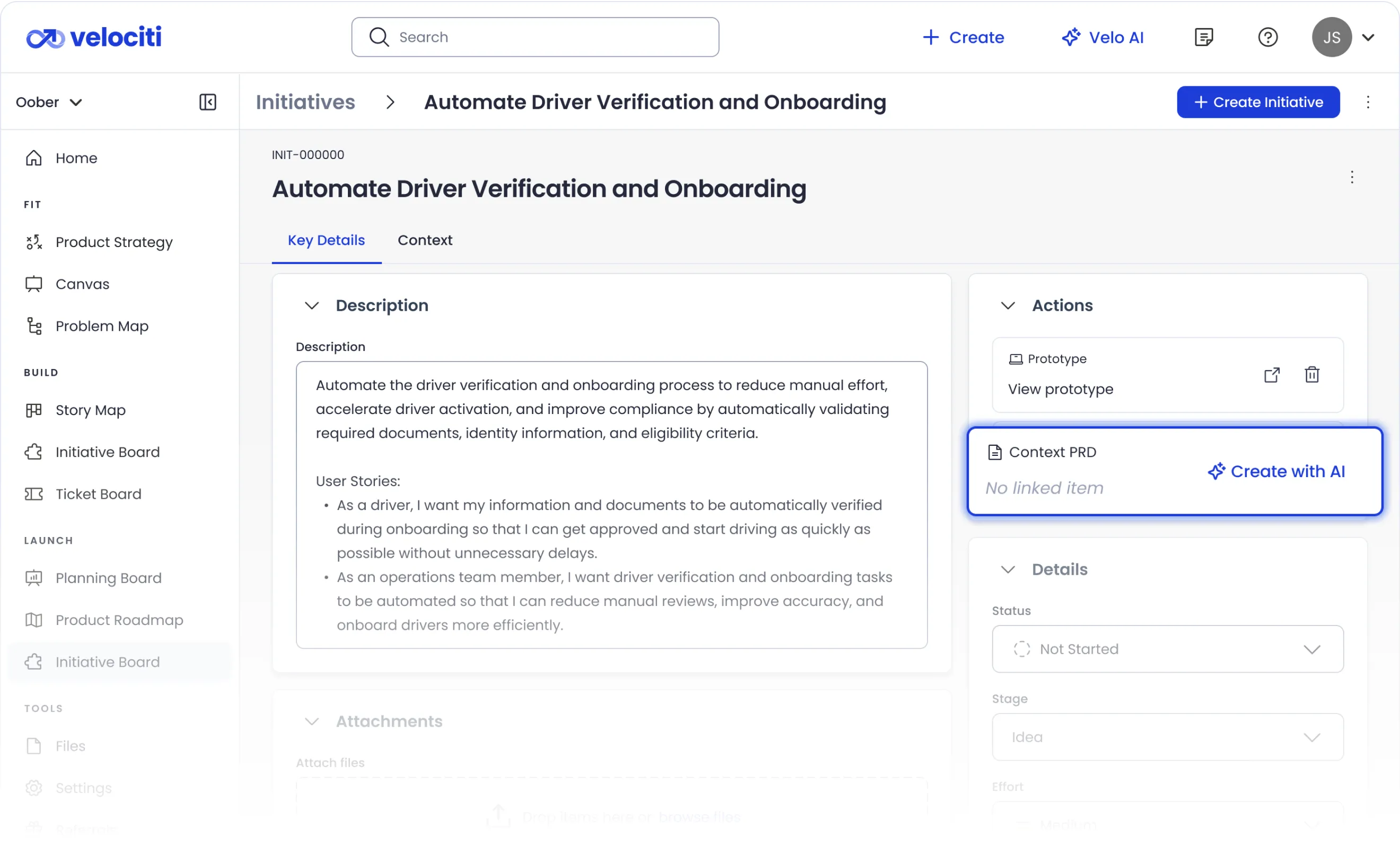
Coordinating a product launch involves multiple teams, milestones, and dependencies. Velociti provides a clear structure to ensure every task is tracked and executed without delays or confusion.
Live visibility into progress across teams allows issues to be flagged and resolved immediately, reducing the risk of missed deadlines or deployment errors.
Launching a product is just the start. Velociti helps teams measure adoption, engagement, and retention metrics, guiding post-launch initiatives that maximize impact.
Alignment between product, engineering, design, and marketing teams is critical. Velociti enables seamless communication and coordination, keeping everyone working from the same plan.
Every product and team operates differently. Velociti allows workflows to be adapted to your processes while maintaining a consistent framework for accountability.
launches, the platform grows with your team, ensuring clarity, control, and efficiency at every stage.
It is the stage where a product moves from build to real-world use. It’s more thanjust releasing code or hitting “go live.” This phase covers deployment, launch readiness, and early growth. The idea is to treat launch not as the end of development, but as the start of learning, feedback, and scaling. By structuring the launch phase, teams can reduce risk, ensure alignment across departments, and focus on measurable outcomes rather than just completing tasks.
Successful launches begin with clarity. At Velociti, we create a high-level checklist that captures everything from technical readiness to internal alignment and external communications. Our product launch software keeps these tasks visible,so teams always know what needs to be done before release. By having all items on one platform, we remove guesswork and make it easy for everyone-from engineers to marketing-to stay on the same page.
A strong checklist includes several key areas: deployment steps, documentation for internal teams and customers, stakeholder communication, and support readiness. Velociti standardizes this process to prevent missed steps, miscommunication, or delays that could slow adoption or create confusion at launch. This structured approach ensures that both internal teams and users experience a smooth, predictable rollout.
Launch timelines vary based on product complexity, but most teams using Velociti prepare in two to four weeks. Importantly, growth planning doesn’t stop at release. Our product lifecycle management software encourages teams to think beyond launch day, supporting ongoing execution and iteration, so the product continues to improve and scale after initial deployment.
Riskis reduced by making readiness explicit. Every task in Velociti has an owner, astatus, and a clear expected outcome. This transparency allows teams to catchissues early rather than reacting at the last minute. By clearly trackingresponsibilities and progress, teams can release confidently, knowing thatdependencies, blockers, and quality checks are accounted for.
Post-launch growth is handled through a structured Growth Plan focused on acquisition, expansion, and retention. As part of our product lifecycle management software, this plan ties growth directly to product strategy, rather than disconnected marketing or sales tactics. Teams can monitor performance, prioritize initiatives, and ensure that every effort contributes to measurable outcomes.
Velociti centralizes all launch activities in a shared workflow. As a product release management platform, it helps product, engineering, marketing, operations, and support stay aligned on timing, responsibilities, and communication. This eliminates silos, reduces errors, and ensures everyone works toward the same goals at the same time.
Velociti helps teams get faster, more accurate feedback from real users. Teams gain clear signals on adoption, engagement, and retention while making handoffs from launch to growth smoother. Instead of guessing whether a launch succeeded, teams have actionable data to inform the next steps and continuously improve the product.
Velociti helps teams get faster, more accurate feedback from real users. Teams gain clear signals on adoption, engagement, and retention while making handoffs from launch to growth smoother. Instead of guessing whether a launch succeeded, teams have actionable data to inform the next steps and continuously improve the product.
While product managers lead launch execution in Velociti, success depends on cross-functional ownership. Engineering, marketing, sales, and support all contribute according to the shared plan. By keeping everyone aligned through release and early growth, the team ensures a coordinated, efficient, and high-impact launch.