
Learn how an AI product roadmap improves roadmap prioritization with real insights. Make smarter product decisions—explore Velociti today.
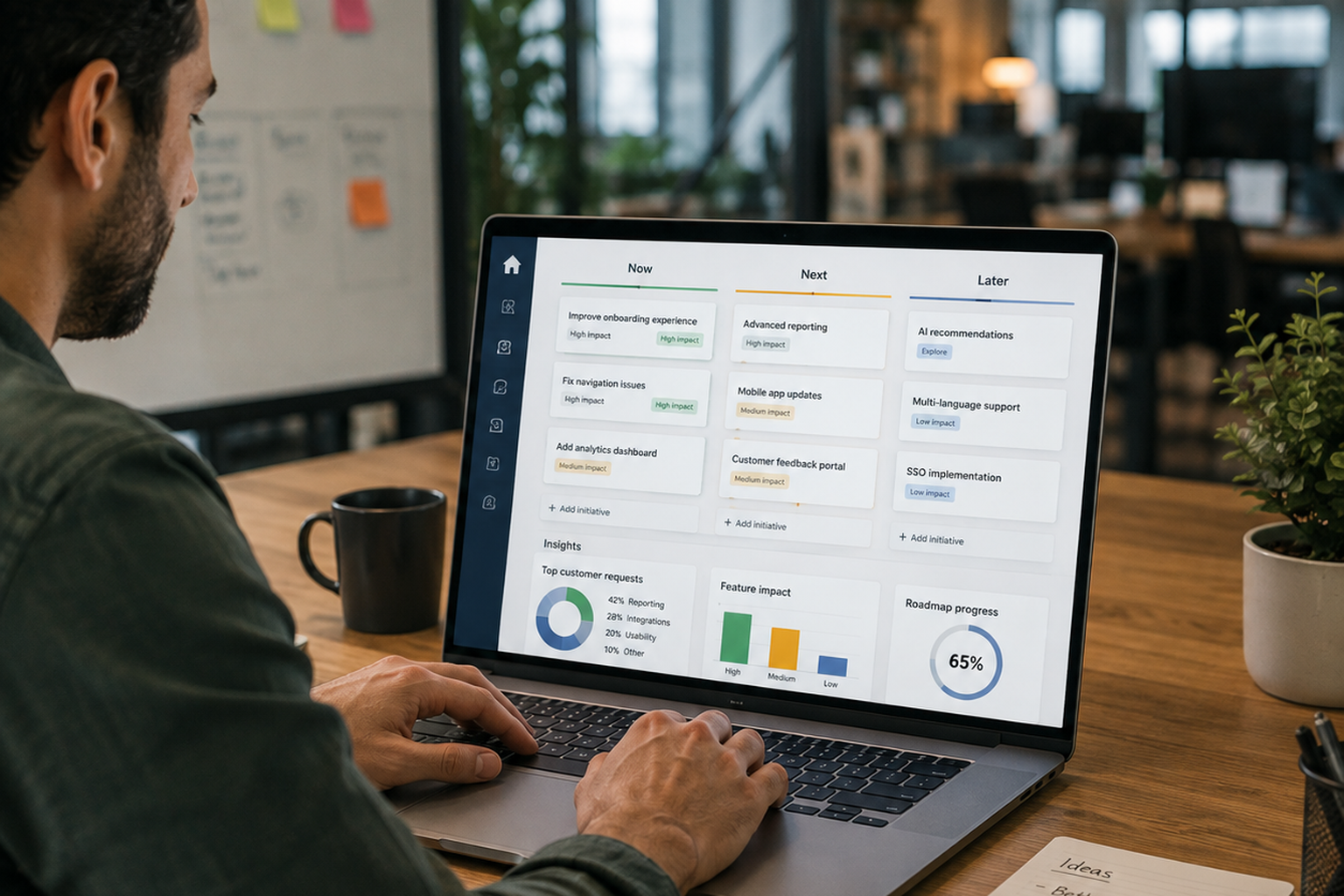
AI product roadmap strategies are changing how modern product teams decide what to build next. Instead of relying on guesswork or lengthy discussions, AI helps teams understand customer needs, organize feedback, and make confident decisions backed by data. Better roadmap prioritization means focusing on the features that create the most value for customers and the business. At Velociti, AI helps product teams spend less time debating priorities and more time building products people truly need.
Every successful product begins with a clear plan. A product roadmap gives teams direction by showing what they plan to build and why it matters. When AI becomes part of that process, planning becomes faster, more informed, and easier to manage. An AI product roadmap uses data and automation to help teams decide which features deserve attention first instead of relying only on opinions or assumptions. When combined with an AI product development platform, product teams can move from planning to execution more efficiently while keeping customer needs at the center of every decision. Rather than replacing product managers, AI gives them better information so they can make smarter decisions with greater confidence.
Some ways AI supports roadmap planning include:
Every product team has more ideas than time. Customer requests continue to grow, stakeholders have different priorities, and development resources are often limited. Deciding what deserves attention first is one of the biggest challenges product managers face. Without a structured process, roadmap planning can become influenced by opinions instead of evidence. Important customer needs may be overlooked while lower-impact features move ahead.
Common roadmap challenges include:
These challenges often slow product development and make long-term planning more difficult.
An AI product roadmap helps remove much of the uncertainty from product planning. Instead of reviewing customer feedback manually, AI analyzes large amounts of information and highlights patterns that would otherwise take weeks to identify. This allows product managers to spend more time making strategic decisions instead of collecting data. AI also helps teams understand which features are likely to deliver the greatest value based on customer demand and business objectives.
AI can support roadmap prioritization by helping teams:
The best product roadmaps begin with listening to customers. Every support ticket, survey, product review, and customer interview contains valuable information. The challenge is bringing all of that feedback together in a way that makes sense. AI helps product teams organize customer feedback automatically. Instead of reading hundreds of comments one by one, product managers receive clear summaries, recurring themes, and recommended priorities.
Customers often describe similar problems using different words. Reading every comment manually makes it easy to miss important patterns. AI recognizes similar feedback and groups it together, giving teams a clearer understanding of what customers actually need. As a result, product managers can make informed decisions without spending countless hours reviewing data.
Not every feature request should become part of the roadmap. Some improvements benefit only a small group of users, while others solve problems experienced by thousands of customers. AI helps teams compare customer demand with business goals so they can prioritize features that create the greatest overall value.
Good product decisions come from reliable information. AI gives teams a broader view of customer behavior, market trends, and historical product performance before major decisions are made. Instead of relying on assumptions, product managers can evaluate evidence from multiple sources before deciding which ideas deserve investment. This creates more confidence throughout the planning process while reducing unnecessary development work.
Better decisions often lead to:
AI is designed to support product managers, not replace them. It removes repetitive tasks so teams can spend more time solving customer problems and planning future improvements. Instead of sorting through spreadsheets, notes, and multiple software platforms, AI organizes information into meaningful insights that are easy to understand.
Research is one of the most time-consuming parts of product management. AI gathers information from multiple sources, identifies trends, and presents useful summaries much faster than manual analysis. This allows product managers to spend more time evaluating opportunities instead of collecting data.
Product planning involves multiple departments, including engineering, design, marketing, sales, and customer support. AI helps everyone work from the same information, making discussions more productive and reducing misunderstandings. When teams share a common understanding of customer priorities, roadmap planning becomes more efficient.
Today's product teams need to make decisions quickly without sacrificing quality. AI helps them balance speed with accuracy by providing reliable insights throughout the planning process.
Some of the biggest benefits include:
As businesses continue to grow, AI helps teams stay focused on building products that deliver real value to customers.
Creating a roadmap is only part of the process. The real challenge is keeping it aligned with changing customer needs, business goals, and market conditions. Velociti simplifies this process by bringing customer feedback, product planning, and AI-powered insights together in one place. As an AI product operating system, it gives product teams a single source of truth, making it easier to prioritize work, collaborate across departments, and make informed decisions without switching between multiple tools.
With Velociti, product teams can:
Every product team works differently, so choosing the right platform is important. A good solution should do more than create a visual roadmap. It should help teams understand customer needs, prioritize features, and adapt as priorities change.
When evaluating an AI product roadmap platform, consider whether it offers:
The right platform should reduce complexity and make product planning easier for everyone involved.
Even experienced product teams can struggle with roadmap planning. Many roadmaps become overloaded with ideas that don't support customer needs or business objectives. AI helps reduce these issues, but teams still need a thoughtful planning process.
Some common mistakes include:
Avoiding these mistakes helps teams build products that deliver greater value while keeping development focused.
AI works best when combined with a clear product strategy. Rather than letting technology make every decision, successful teams use AI to support discussions and validate priorities with real customer insights.
A few simple habits can improve your roadmap planning:
When AI and human judgment work together, product teams can make stronger and more confident decisions.
Product roadmaps are becoming more dynamic as AI continues to evolve. Instead of updating roadmaps only once every few months, teams can respond to customer feedback much more quickly. AI helps identify changing trends, shifting customer expectations, and new opportunities before they become obvious. As AI technology advances, product teams will spend less time managing data and more time creating products that solve meaningful customer problems. Businesses that adopt AI today will be better prepared to innovate and compete in the future.
An AI product roadmap helps product teams make better decisions by turning customer feedback and business data into clear priorities. Instead of relying on assumptions, AI gives teams the information they need to build products that solve real customer problems. Better roadmap prioritization leads to smarter planning, stronger collaboration, and more successful product outcomes. At Velociti, we believe product planning should be simple, collaborative, and data-driven. Our AI-powered platform helps teams organize insights, prioritize with confidence, and build roadmaps that support both customer needs and business growth. Ready to create a smarter product roadmap? Contact Velociti today to discover how our AI-powered platform can help your team prioritize with confidence and deliver better products faster.
An AI product roadmap uses artificial intelligence to help product teams organize customer insights, prioritize features, and make better roadmap decisions based on real data rather than assumptions.
AI analyzes customer feedback, product usage data, and market trends to identify which features are likely to deliver the greatest value. This helps teams make faster and more informed prioritization decisions.
No. AI supports product managers by reducing manual work and providing valuable insights. Strategic decisions still require human experience, customer understanding, and business knowledge.
Good roadmap prioritization ensures product teams focus on the work that delivers the highest value for customers and supports overall business goals. It also helps teams use their time and resources more effectively.
Velociti combines AI-powered insights, customer feedback, collaboration, and roadmap planning into one platform, making it easier for product teams to prioritize work and build products with confidence.
.png)
.png)
.png)